
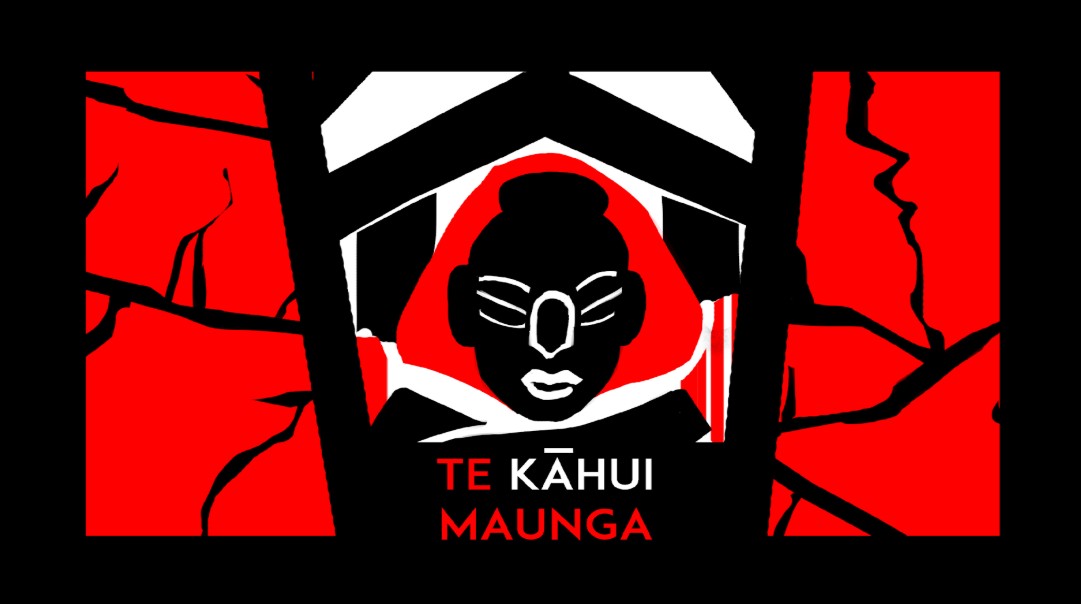
The sea still foamed with the monumental effort of Māui and his brothers, who had just hauled the colossal ika from the dark depths of the ocean. As their blades bit into its flesh, the Great Fish thrashed and writhed in agony, its violent convulsions carving deep valleys and thrusting up jagged maunga across the new land. Upon this fresh earth, a grand house named Te Uru o Tonganui was erected—a sanctuary for Māui, Tangaroa atua of the sea, and their divine kin.
Time flowed on, and from the landscape emerged a majestic cluster of maunga. These were no ordinary peaks; they were the Kāhui Maunga, supernatural beings and the direct ancestors of humanity. They chose to settle upon the shores of the eye of the ika, a place blessed with a pristine freshwater spring known as Te Wai Manga. Yet, their presence carried a grim and vital purpose. The Kāhui Maunga were tasked with a monumental labour: they had to pry open the tightly clenched jaw of the dying ika to ensure it would finally perish, but its teeth remained locked in a stubborn, unyielding grip.
To summon the strength needed for this feat, the Kāhui Maunga ascended the slopes of Pukeatua—the hill today known as Wainui—to reach the sacred altar dedicated to Ranginui, the Sky Father. Standing beneath the expanse of the heavens, they chanted Te Hau Tupua, a powerful, sacred karakia. The incantation rippled through the cosmos, causing the very earth to tremble and shake. Beneath them, the land softened and dissolved, giving rise to a vast swamp named Te Ngaengae.
First to answer the call were two small taniwha, manifestations of the earth’s deep fault lines. They lunged forward to break the jaw, but their strength failed them; defeated, their winding paths transformed into the gentle awa of Te Awamutu and Waiwhetu.
But the ritual was far from over. With a deafening tear, the earth split wide open, revealing first a sharp claw and then a piercing fang. From the chasm emerged the true ancient guardians of the landscape. First came Ngake, a fierce and monstrous taniwha, embodying the raw, violent energy needed to settle the restless earth. Following closely behind was Whātaitai, a creature of stark contrast, whose voice carried a gentle grace and whose form brought a soothing calm to the newly shaped world.
Reo Māori
| Māori | English | Māori | English |
| ika | fish | maunga | mountain |
| karakia | prayer | taniwha | water guardian |
| awa | river |