
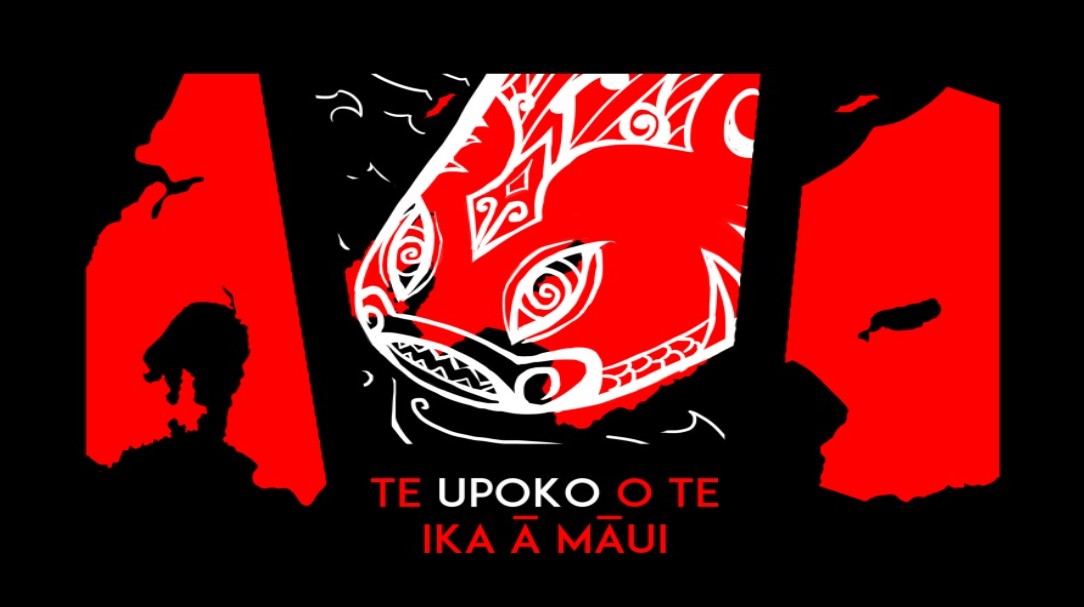
Long ago, before there were roads, shops, or houses, the area we now know as Wellington and the Hutt Valley was a completely different world. It was a place of powerful taniwha, brave explorers, great battles, and a landscape that could change in the blink of an eye.
This is the story of that land, the waters that flow through it, and the people who called it home.
Before it was a bustling harbour, Wellington Harbour was actually a massive, fresh-water lake called Te Wai Manga.
The people of Te Kahui Maunga iwi lived around this lake, surviving on the abundant fish. But one day, a giant, magical fish was caught. To overcome it, the people climbed up to Tangi te Keo, the high summit of the Wainuiomata Hill (Puke Atua). There, they chanted powerful karakia to summon mighty taniwha to defeat the giant fish.
First they first summoned two smaller taniwha named Waiwhetu and Awamutu. They weren’t quite strong enough to defeat the fish, but as they twisted and turned through the land, they carved out the smaller streams we can still see in the area today.
Next, the people summoned two massive taniwha. Ngake was energetic and fierce, while Whātaitai was calm and serious. Together, they defeated the giant fish!
When Ngake crashed through the land to fight, he broke open a channel to the ocean, turning the lake into the sea harbour we know today. These two great taniwha were so powerful that their resting places became the major earthquake fault lines that run beneath Wellington!
During the great battle, Whātaitai coughed up sea spittle, which magically transformed into three islands in the harbour. Later, the famous explorer Kupe—who had sailed all the way from Hawaiki on his canoe, the Mata Hourua, after chasing and slaying a giant wheke—named these islands after his daughters: Mokopuna (the smallest one), Matiu, and Makaaro.
The very first iwi to permanently settle in this beautiful area were the Ngai Tara. Their chief, Tara-ika, named the massive harbour Te Whanganui-ā-Tara (The Great Harbour of Tara). It is also known as Te Upoko o te Ika (The Head of the Fish) and Pōneke.
Back then, the Miramar Peninsula was actually a complete island called Motu Kairangi. But the earth is always alive here. In 1855, a massive earthquake known as Kumekume shook the land so violently that the seabed rose up, filling the gap with land and connecting the island to the mainland. Eventually, the Ngai Tara people moved north to the Horowhenua region, where they are known today as Muaupoko.
Further up the valley, the river known as Te Awa Kairangi (The Hutt River) was a wide, swirling delta. Its name literally translates to “food from the sky” because it was absolutely bursting with fish and birds.
The Waiwhetu iwi lived here in paradise, with an endless supply of food from the heavens. Nearby was the Ahipapera puna and Hīkoikoi pā, along with sacred urupā.
But the land also holds memories of fierce history. A sacred place named Pūharakeke Tapu marks the site of a great battle between rival iwi. The battle was so intense that the fallen were laid to rest in the surrounding harakeke, making the area a wahi tapu. After the battle, some iwi decided it was time to move away to find peace.
Over the years, many different tribes traveled through and lived in Wellington. The most recent iwi to settle in the area was Te Atiawa, who had journeyed all the way from Taranaki.
Te Atiawa were living successfully across the land when the Pākehā arrived. As more and more settlers moved in, the landscape changed forever. The Waiwhetu iwi were pushed away from their traditional pataka kai by the rich river and moved into the damp swamplands of Naenae. To make up for the land they lost, they were also given pieces of land further away in Palmerston North.
Today, when you look at the hills, the streams, and the harbour of Wellington, you are looking at a living history book—one shaped by taniwha, earthquakes, brave explorers, and the enduring spirit of the iwi.
Reo Māori
| Māori | English | Māori | English |
| taniwha | water guardian | ika | fish |
| karakia | prayers | motu | island |
| waka | canoe | wheke | octopus |
| puna | spring | pā | fortified village |
| urupā | burial ground | harakeke | flax |
| wahi tapu | sacred place | pataka kai | food storehouse |